Over centuries following the fall of the Roman Empire, Rome became unhappy with the growing power of Constantinople in the East. So, in 795 AD, the western bishops cheekily named Leo III Pope in the West. On Christmas Day 800 AD, Leo crowned a reluctant Charlemagne as Emperor of the Romans, sealing the deal and forever splitting Christendom into East and West. The collection of Christianized tribes Charlemagne already ruled became the new kingdom of Francia.
Abbo of Cernuus, when describing the siege of Paris in 885 AD, would have us believe Francia was God’s kingdom on earth, that its Pope alone spoke for God, and its king battled demonic hordes of Norse on behalf of all Heaven. But then, nothing about that tricky little Benedictine monk was straightforward.
Melunois
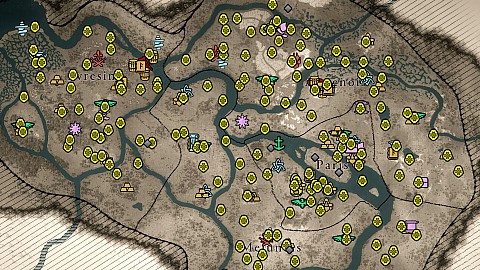
Ravaged by fighting between Charles and the Norse, the once flowered fields and forests of Melunois were by 885 AD scarred by burning and logging. Charles had forced Sigfred and his clan to Melunois from the North, something he later came to regret as it put them within handy striking distance of Paris. Whoops.
Paris
Despite decades of attacks from the Norse and regular ransoming by impuissant kings, 9th Century Paris endured undaunted. Neither Ragnar nor the plague could break the Parisians’ stubborn faith. Perhaps there's something to the legend of Saint Germain protecting the city. More likely they were just a bloody tough lot.
Evresin
Many Norse eventually moved northward after taking Paris, giving the area its modern name of Normandy. But in the 9th Century the north of Francia was called Evresin, and its people suffered beneath the oppression of particularly nasty religious fanaticism. Odd how those things so often appear together in history.
Amienois
Wedged between Paris and Evresin, 9th Century Amienois contained the disputed ancestral lands of Count Odo's family and was famed for its colored textiles. The area also held the township of Amiens, home to an Amphitheatre offering entertainment both whimsical and banal. Not surprisingly, Charles the Fat loved the place.